

Inhalant abuse and addiction…sounds too silly to exist, right? Think again – according to a 2015 study from the National Institute on Drug Abuse, 9.4% of 8th graders have abused inhalants.
That number isn’t as large as, say, the amount of 8th graders who have smoked pot, but it’s still much too high. Things only get worse when you consider the type of inhalants adolescents are abusing and their dangerous short and long-term effects.
We’ll cover all this in detail below, but let’s first look at some more facts and statistics about inhalant abuse.
- Inhalant users between the ages of 12 and 15 commonly abuse glue, shoe polish, spray paints, gasoline, and lighter fluid (NIDA).
- Inhalant users between the ages of 16 and 17 commonly abuse nitrous oxide (NIDA).
- Adult inhalant users commonly abuse nitrites like amyl nitrite (NIDA).
- A 2010 NSDUH survey found there were 793,000 people over the age of 12 who had abused inhalants that year. Of these close to 800,000 people, just over 68% were under the age of 18. (NIDA)
- Despite these large numbers, inhalant abuse as a whole is significantly less than it was several years ago. In fact, it decreased 33% between 1993 and 2008 (NIDA).
- Demographically, Hispanic 8th and 10th graders have the highest rates of past-year inhalant use and abuse (NIDA).
Now that we know the scope of inhalant abuse among young people, let’s drill down into the details. Let’s look at what inhalants are, some of the common types, their different effects, and the dangers associated with inhalant use.
GET CONFIDENTIAL HELP NOW!


What are Inhalants?
While this question may seem obvious – what are inhalants? They’re a class of drug you inhale! – it’s a bit more complex than it first looks. Consider that the term inhalant is used broadly to refer to several different families of chemicals. Consider that most inhalants aren’t regulated. Consider that they produce different effects for different people.
Yeah, things get a little more complicated than they appear at first.
So, what are inhalants? Well, they’re several classes of chemicals that produce psychoactive effects if inhaled. It’s important to stop here and note these psychoactive effects are as much a product of cutting off the brain’s oxygen supply as they are of the chemicals themselves.
Let’s also talk about something called Sudden Sniffing Death Syndrome (SSDS). This is the condition behind all those “one huff can kill” PSAs from the ’90s. SSDS is triggered when the inhalant being abused causes the heart to start beating out of control and irregularly (medically referred to as an arrhythmia) and results in cardiac arrest.
Okay, enough of the scare stories. Let’s explore the different types of chemicals that make up the inhalant family.
Common Types of Inhalants
While almost any product that’s pressurized can be huffed, that’s far from the entire family of inhalants. In fact, inhalants extend beyond just aerosols and industrial strength solvents. They include three major classes.


These are:
- Solvents (liquids that vaporize at room temperature) – paint thinner, gas, glue, white out, felt-tip markers, etc.
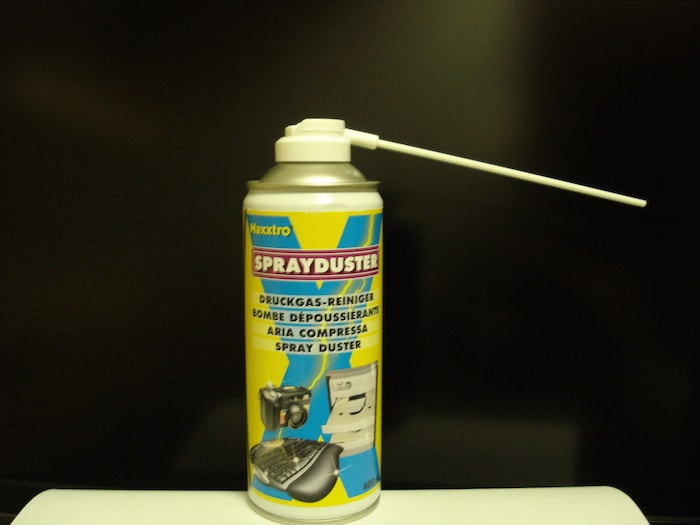
- Aerosols (sprays that contain propellants and solvents) – spray paint, computer duster, hair spray, deodorant, cooking spray, etc.
- Gases (medical anesthetics or household and commercial products) – chloroform, halothane, nitrous oxide (laughing gas), etc.
While these three categories make up the vast majority of abusable inhalants, they’re not every type. Remember when we mentioned nitrates (sometimes called poppers)? Well, those are another liquid that can be inhaled to produce psychoactive effects.
While abusing chemicals like nitrates is significantly rarer than, say, huffing computer duster or whipped cream propellant, it does happen and we wouldn’t be doing our job here at Malvern if we didn’t mention it.
Now that we know what inhalants are, let’s turn our attention to some of their euphoric effects.
What are Their Effects?
The actual “high” from inhalants is usually a head rush followed by a “warm” and “out-of-it” feeling for several minutes. The euphoria quickly fades. This leads to repeated use and some of the dangerous physical effects explored below.
Psychoactive Effects
- Euphoria
- Dizziness
- Drowsiness
- Disinhibition
- Lightheadedness
- Flushing or Brief Sensation of Heat
- Confusion & Disorientation
- Headaches
Physical Effects
- Nausea & Vomiting
- Slurred Speech
- Lack of Coordination
- Short Periods of Unconsciousness
- SSDS
- Enlarged Blood Vessels (if abusing nitrates)
- Increased Heart Rate
All the information above is taken from the National Institute on Drug Abuse’s Inhalant Chart.
What are the Short & Long-Term Dangers of Inhalant Abuse?
Here’s where things start to get really scary. Forget about Sudden Sniffing Death Syndrome or anything that happens right away…inhalants destroy the body over time. They’re one of the worst drugs to abuse, despite being available in any grocery store.
Consider the following short and long-term effects of inhalant abuse:
Short-Term
- Central Nervous System Damage
- Brain Damage
- Convulsions & Seizures
- Coma
- Death due to Asphyxiation
- Death due to Suffocation
Long-Term
- Hearing Loss
- Nerve Damage (resulting in, among other things, limb spasms)
- Bone Marrow Damage
- Liver & Kidney Damage
- An Increased Risk of Pneumonia (if abusing nitrites)
- Low Blood Pressure (if abusing nitrites)
- Pregnancy Complications Including: low birth weight, bone problems, delayed behavioral development due to brain problems, altered metabolism and body composition.
All the information above is taken from the National Institute on Drug Abuse’s Inhalant Chart.