
Language is a powerful tool. It shapes and changes how we communicate with each other. It’s the basis for our modern society and all past civilizations since we were living in caves. It can be used for incredible good or unthinkable evil.
That sounds a bit melodramatic, right? We’re with you. Anytime someone says the words “unthinkable evil” our jaws clench up a bit and we get the distinct desire to roll our eyes.
Still, it’s true. Language is the building block of all human communication. Without it, well, without it we’d be lost.
Language is complicated though. Consider the word “addiction.” What does it really mean? Is there even one standard definition? Doesn’t it mean different things to different people at different times?
These are some of the thoughts we preoccupy ourselves with here at Malvern. We’re fighting to end addiction on all fronts. We’re fighting to change how people treat it. We’re fighting to end how society stigmatizes it. We’re even fighting to change how we think and talk about it.
With that in mind, read on to learn what addiction really means from four perspectives: the dictionary, the medical community, the addict themselves, and the addict’s family.
Addiction According to the Dictionary
Seems like a good place to start, right? Isn’t that how so many graduation speeches and best-man toasts start? “The dictionary defines…?”
So, how does the dictionary define addiction? Well, according to Google, it reads –
/əˈdikSHən/ “The fact or condition of being physiologically dependent on a particular substance, thing, or activity.”
Straightforward and no nonsense. Exactly like you’d expect a dictionary definition to be. Fair enough. Let’s get a bit deeper though. Let’s break down exactly what this means.
First, according to the dictionary, addiction is a fact or condition. Seems legit. It goes on to state that addiction happens when a person’s “physiologically dependent” on something. That means when someone’s mentally and physically hooked.

Interesting point. The dictionary’s letting us know, in no uncertain terms, that addiction isn’t only physical and it isn’t only mental. It’s a comprehensive condition that affects many different areas of a person’s life.
Finally, it says that addiction can occur to a “substance, thing, or activity.” This is important. Addiction isn’t only limited to drugs or alcohol. It isn’t only limited to behavior or people. Rather, it’s an all-encompassing state that occurs when a person becomes dependent on anything.
That covers the dry and boring stuff (unless you’re into words like we are). Now, let’s look at addiction from a clinical perspective.
Addiction According to Clinicians
According to the American Society of Addiction Medicine (ASAM), addiction is defined as –
“Addiction is a primary, chronic disease of brain reward, motivation, memory and related circuitry. Dysfunction in these circuits leads to characteristic biological, psychological, social and spiritual manifestations. This is reflected in an individual pathologically pursuing reward and/or relief by substance use and other behaviors.
Addiction is characterized by inability to consistently abstain, impairment in behavioral control, craving, diminished recognition of significant problems with one’s behaviors and interpersonal relationships, and a dysfunctional emotional response. Like other chronic diseases, addiction often involves cycles of relapse and remission. Without treatment or engagement in recovery activities, addiction is progressive and can result in disability or premature death.”
That’s a lot to take in…and that’s their short definition! The long one’s well over 2,000 words. Yikes.
Okay, let’s break this down as easily as possible. According to the ASAM, addiction is a disease. That’s important. It isn’t a moral failing or a case of weak willpower. It’s a medical condition.
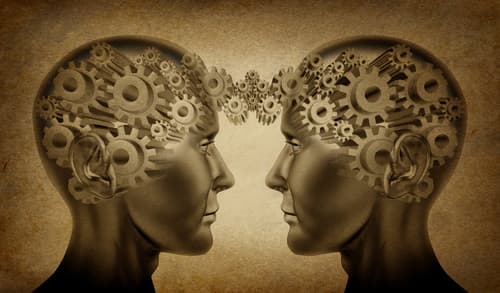
Addiction is chronic or on-going. It isn’t a one-and-done deal. It’s primarily a brain disease and centers in areas around motivation and memory. That means addiction is an on-going condition that’s centered in how people think, remember, and motivate themselves.
Given our experience here at Malvern – close to 70 years – we’d say that’s spot on.
The ASAM goes on to say addiction manifests itself through biological, psychological, social, and spiritual channels. In other words, the brain disease of addiction can be seen through:
- How the body works (think physical dependence on, say, heroin)
- How the mind works (think the incredibly strong craving that meth produces)
- How we interact with others (think lying and isolation in order to continue use)
- How our soul works (feeling emptiness or a loss of purpose)
While that’s a vast simplification of the ASAM’s definition, it’s addiction broken down in practical terms. Again, it matches our experience here at Malvern.
Their definition goes on, but we’ll stop here for the sake of brevity. Check out the link above to their site for a full breakdown. It’s interesting and thought-provoking stuff.
Okay, we’ve covered addiction from the outside looking in…but what’s addiction like if you’re the one struggling?
Addiction According to an Addict
It’d be easy here to gloss over what addiction is really like and write something like “drugs are bad.” That wouldn’t be right though. So, what did we do? We went out and asked people in recovery how they’d describe their active addiction.
The results? Well, addiction sounds almost exactly like what you’d think. We’ll let them speak –
“It started out innocently, a few drinks at a party or with friends. Soon my tolerance increased, I needed more, and when I didn’t have a drink I felt irritable and anxious. On a few occasions hot and sweaty and my hands couldn’t stop shaking. Once I started I couldn’t stop. Having a beer after work wasn’t enough, I needed to be drunk.”
and
“I probably stared because of boredom. I quickly realized that I liked how drugs made me feel more than I liked being sober. It got out of control from there. It was an urge that didn’t go away. Just a ‘quick hit’ didn’t control the urge, I found myself lost for an entire day of using.”
Let’s break down what their explanations mean. First, both people started out innocently enough. They didn’t take one drink, or one hit, and become irrevocably addicted. Rather, they drank and used drugs for the positive effects.
They continued to use for two reasons – to increase these positive effects and to avoid the uncomfortable feeling that came from being sober. In other words, tolerance and dependence set in. When they couldn’t drink or drug, withdrawal set in.
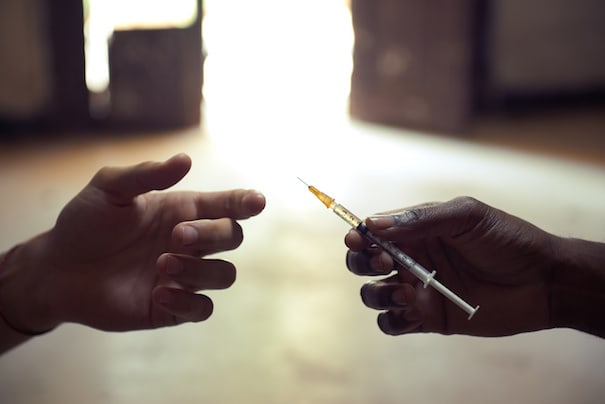
Sounds familiar to us. We hear these stories everyday from our patients and they never get less heartbreaking.
Finally, addiction took over. Both people found themselves hooked to the point of negative consequences. They both became determined to stop…but couldn’t.
And perhaps that’s the most important part of defining addiction from an addict’s point-if-view. Despite popular opinion to the contrary – they want to stop. They want desperately to stop, but can’t.
Okay, we’ve explored almost every definition of addiction there is. We still need to take a look at what addiction means to the family and friends watching their loved one spin out of control.
Addiction According to the Family
How does the family define addiction? Well, it usually goes a little something like this –
“We’ve watched our loved one fall into a dark place. They lost their job, their friends, their self-respect, and their health is deteriorating before our eyes. They’ve missed important family events. When we approach them about their use, their mood’s always changing. Sometimes they try to convince us they aren’t using and sometimes they don’t. Sometimes they’re regretful and want to change and sometimes they’re angry, dismissive, and rude. Whatever they’re like that day…we have to deal with it and find some way to live ourselves.”
If that sounds familiar then you might have a loved one that’s an addict. It isn’t easy to deal with. In fact, many times, it’s downright terrifying and heartbreaking.

Still, we have a job to do. We came here to break down how addiction’s defined by various people and groups. Let’s break down how the family experiences it.
First, they see their loved one struggle with something beyond their control. The word powerless comes to mind, as does the word anxious. The family has to stand by and watch the struggling member fight a battle against themselves, a battle they’re not guaranteed to win.
Next, the family experiences the roller coaster reactions and emotions of the addict. Sometimes it’s anger. Other times it’s remorse. Still other times it’s a mix of the two.
The point is that the family’s basically at the mercy of the addict’s unpredictable emotional state.
Finally, and this one goes back to the first point, the family struggles with acceptance. They need to live their own lives despite their loved one’s addiction. They need to take care of themselves and find some way to move on (that doesn’t mean abandoning the addict, but rather practicing restraint and levelheaded response).
It’s rough to say the least. Having a loved one struggle with addiction is probably the hardest thing most families will ever have to deal with. The good news is there’s hope in the form of treatment and twelve-step fellowships. Recovery isn’t always easy, but it is always possible.
What Does Addiction Mean to You?
How do you define addiction? Let us know on social media.